The EV industry has largely settled on a winner when it comes to charging connectors — nearly every major automaker has adopted NACS. But walk into a used car lot or look at an older model year, and you'll still find cars with different ports. Understanding what you're buying matters, because the charging connector on your EV isn't just a plug — it determines where you can charge, how fast, and how easily.
The Connectors Still Out There
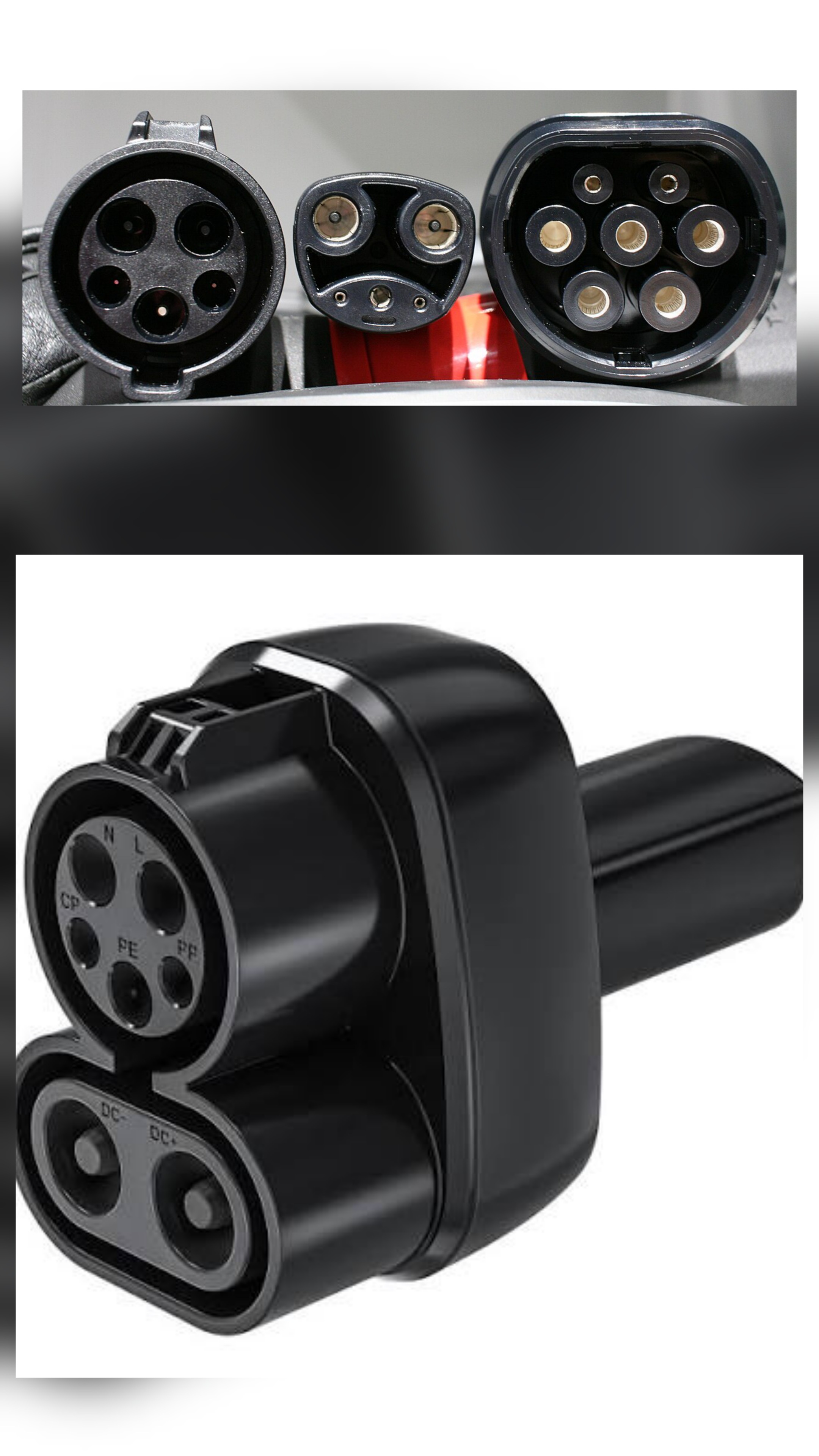
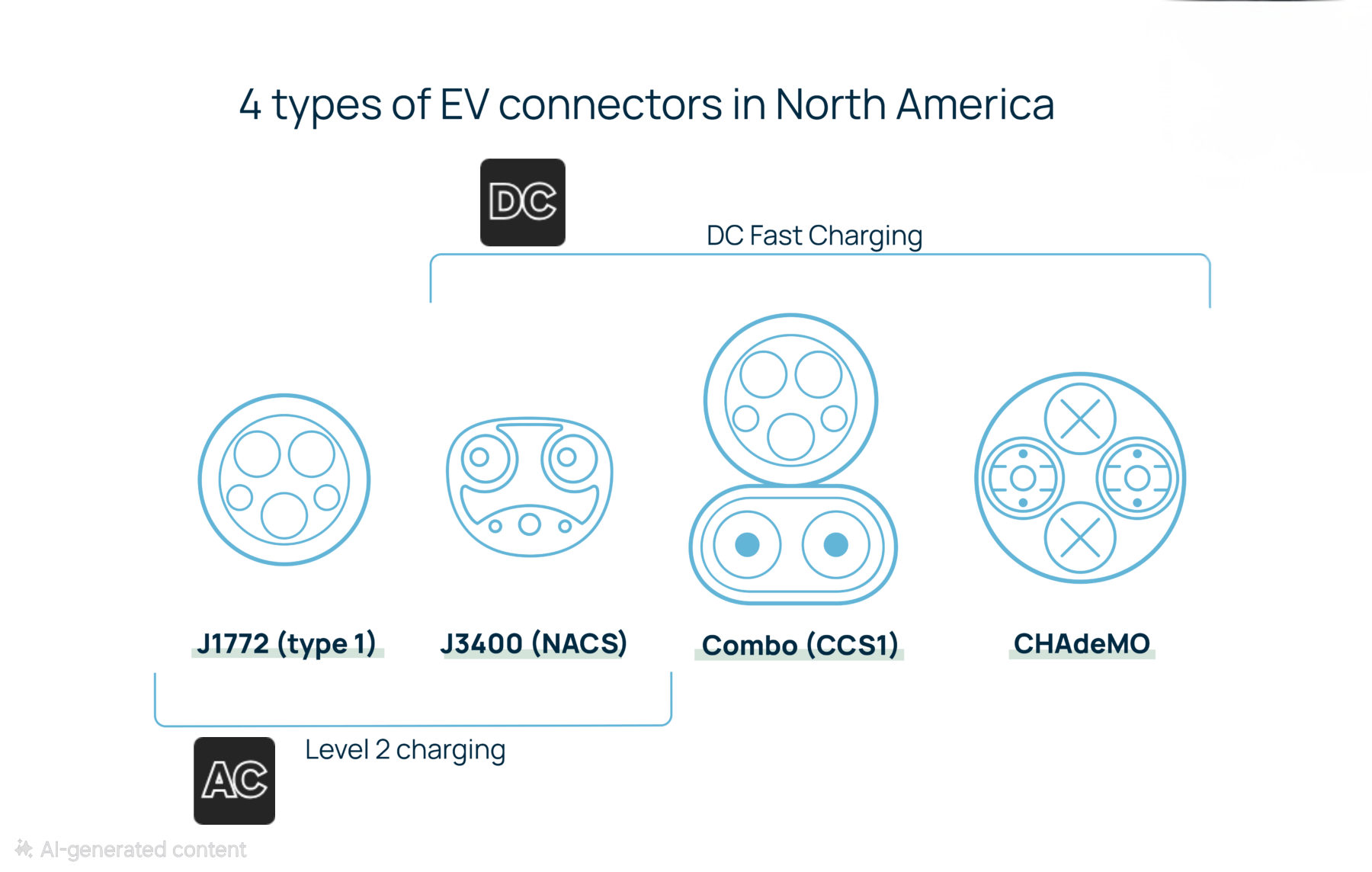
There are currently three connectors you're likely to encounter on EVs sold in North America: NACS (the Tesla connector now standardized as SAE J3400), CCS Combo 1, and CHAdeMO. Each has a different design philosophy — and very different support going forward.
Why NACS Wins on Engineering Alone
Before you even look at a charging map, NACS stands apart mechanically and technically. It is the smallest of all the major connectors — noticeably more compact than CCS Combo and CHAdeMO. That alone makes it easier to handle, especially in cold or wet conditions. But the real engineering advantage is that NACS passes both AC and DC power through the same set of pins. Every other connector type either handles one or the other, or combines two separate connector designs into one larger body like CCS does.
This matters in real life. CHAdeMO vehicles like the original Nissan Leaf actually carry two separate charge ports — one for CHAdeMO fast charging and one for J1772 Level 2. That's complexity for complexity's sake. NACS eliminates it entirely.
The Charging Infrastructure Gap Is Real
Engineering advantages only matter if there are chargers to plug into. And this is where the gap between NACS and the alternatives becomes a daily reality rather than a spec sheet comparison.
Tesla's Supercharger network is the largest, most reliable, and most geographically distributed fast charging network in North America — and it is NACS. As other automakers have adopted the standard, those cars now access Superchargers too. Networks like Electrify America and EVgo are also adding NACS cables alongside CCS to serve the growing base of NACS vehicles.
CHAdeMO is effectively in infrastructure decline. Stations are aging, and many networks have stopped adding new CHAdeMO cables. If you buy a CHAdeMO vehicle today, your fast charging options are already narrowing — and they'll keep narrowing over time.
What This Means When You're Buying
If you're buying a new EV in 2026, nearly every major brand has moved to NACS. Tesla, Ford, GM, Rivian, Volvo, Honda, Toyota — they're all on NACS now. The decision is mostly made for you. Where it gets important is in the used market or with a few holdout models.
A used Nissan Leaf with CHAdeMO might seem like a great deal on paper. But factor in the shrinking fast charger footprint, the need for a separate AC port, and the lack of Supercharger access — and the economics shift. The same logic applies to older CCS vehicles, though CCS has a more robust network than CHAdeMO and adapter options are improving.
The Verdict
NACS Is the Clear Winner
Smallest connector. Only design that handles AC and DC through the same pins. Largest charging network in America. Adopted as an SAE standard. Supported by every major automaker. On mechanical design, technology, and charging availability — NACS wins all three. When buying an EV, it's no longer just preferred: it's the obvious choice.
The industry has spoken. The charging port wars are essentially over. NACS won, and if you're buying a new EV today, you're almost certainly getting it — which is exactly the right outcome for drivers.